
Poor TV Reception Sydney? 9 Common Causes & Fixes
Pixelated channels, missing stations, intermittent reception or a complete “No Signal” message can make watching TV frustrating.
If you’re experiencing poor TV reception in Sydney, the problem isn’t always the television itself. Reception issues can come from the antenna, cabling, connectors, signal levels, interference or even changes around your property.
In this guide, we explain the most common causes of TV reception problems, what you can check yourself and when it may be time to call a professional antenna technician.
What Does Poor TV Reception Look Like?
Digital television reception problems usually appear as:
- Pixelated or freezing pictures
- Channels cutting in and out
- Audio dropping out
- Some channels working while others don’t
- “No Signal” appearing on the TV
- Channels disappearing after previously working
- Reception becoming worse during bad weather
- One TV working while another TV in the house has problems
Unlike older analogue television, digital TV often works normally until signal quality drops below a certain level. The picture may then suddenly pixelate or disappear rather than gradually becoming snowy.
1. Your TV Antenna Is Old or Damaged
The antenna on your roof is exposed to Sydney’s sun, wind, rain and storms every day.
Over time, antenna elements can become damaged, mounts can loosen and components may deteriorate.
An older antenna may also no longer be positioned correctly.
Signs of an antenna problem can include reception that suddenly becomes unreliable, multiple channels disappearing or reception becoming noticeably worse after strong winds or storms.
If the antenna is physically damaged, constantly adjusting your TV settings won’t solve the underlying problem.
A professional inspection can determine whether the antenna can be repaired or whether a replacement would be more reliable.
Learn more about our TV antenna installation and repairs in Sydney.
2. Your Antenna Has Moved Out of Alignment
An antenna needs to receive the television broadcast signal correctly.
Strong wind, roof work or a loose mounting bracket can move an antenna slightly out of position.
Even a relatively small change can sometimes affect signal quality, particularly in locations where reception was already marginal.
A technician can test signal strength and quality rather than simply turning the antenna until the picture appears.
This is important because having a picture on one channel doesn’t necessarily mean the antenna is optimally aligned for all available channels.
3. Damaged or Poor-Quality Coaxial Cable
Your antenna is only one part of the television reception system.
The coaxial cable connecting the antenna to your television is equally important.
Cables can become:
- Damaged
- Crushed
- Corroded
- Water affected
- Poorly terminated
- Disconnected
- Deteriorated with age
External cables are particularly vulnerable to weather exposure.
A damaged cable can introduce signal loss or interference even when the antenna itself is working properly.
If your reception problems affect one section of the house or a particular TV point, cabling should be checked.
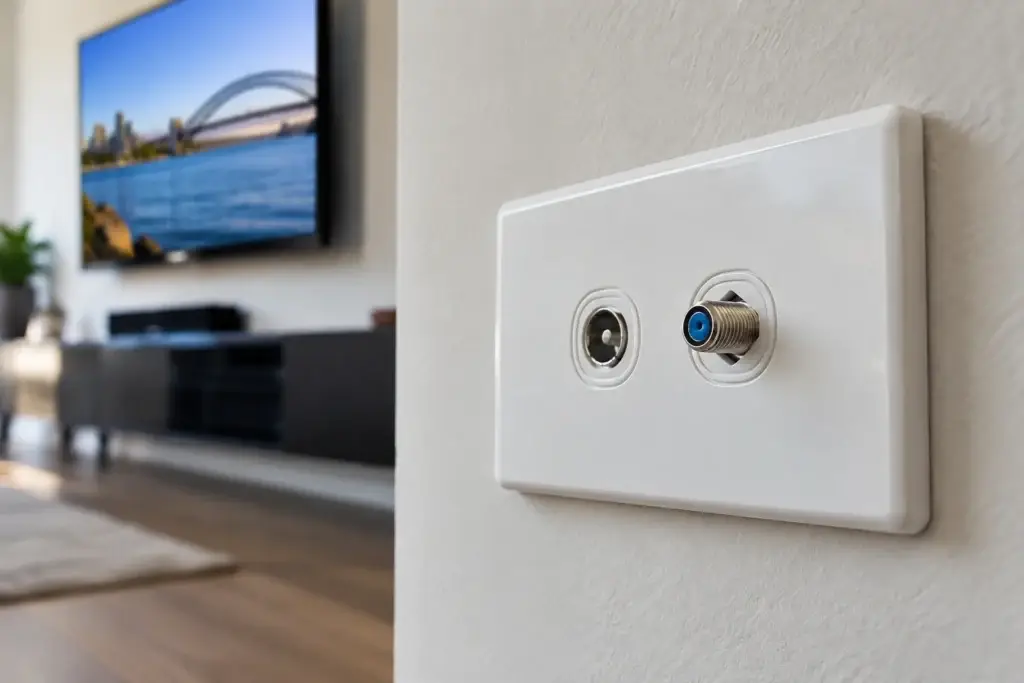
4. Loose or Faulty TV Wall Plates and Connectors
Sometimes the problem is much closer to the television.
A loose connector behind the television or a damaged wall plate can cause surprisingly severe reception problems.
Check that the antenna cable is firmly connected at both the television and wall socket.
If moving the cable makes the picture appear and disappear, the connector, cable or wall plate may require attention.
Replacing a cheap flylead between the TV and wall socket is also a simple troubleshooting step before investigating the rooftop antenna.
5. Your TV Signal Is Too Weak
TV reception requires sufficient signal strength and quality.
Signal loss can occur because of:
- Long cable runs
- Multiple television outlets
- Splitters
- Poor cabling
- Building materials
- Distance from the broadcast transmitter
- Local terrain
- Obstructions
If one antenna feeds several TVs, every split in the system can reduce the available signal.
In some installations an amplifier may be appropriate, but installing an amplifier without testing the signal first is not always the right solution.
An amplifier cannot repair a poor-quality signal.
Professional signal testing helps determine whether the problem is genuinely low signal strength or something else in the system.
6. The Signal Can Also Be Too Strong
More signal isn’t always better.
An excessively strong television signal can overload equipment and cause reception problems that look similar to weak reception.
This is one reason blindly installing a booster is a bad approach.
The correct solution depends on measured signal strength and signal quality.
A technician with suitable testing equipment can identify whether the television system needs amplification, attenuation, antenna adjustment or another repair.
7. Your Antenna Amplifier or Power Supply Has Failed
Some homes use a masthead amplifier or distribution amplifier to maintain adequate TV signal levels.
These systems commonly have a power supply located somewhere inside the house.
If the amplifier or its power supply fails, television reception can suddenly become weak or disappear completely.
This is particularly worth investigating if:
- Every TV loses reception simultaneously
- Reception previously worked well
- The problem appeared suddenly
- The property has several TV outlets
Replacing an amplifier without checking the rest of the installation isn’t always necessary. The power supply, connectors or cabling may be responsible instead.
8. Interference Is Affecting Your TV Signal
Electrical and radio-frequency interference can also affect television reception.
Potential sources can include electrical equipment, damaged components and other nearby transmission sources.
A properly installed antenna system should minimise interference, but older or poorly shielded components may be more susceptible.
If your TV reception repeatedly drops out at particular times or when certain equipment operates, interference may be worth investigating.
9. New Buildings, Trees or Other Obstructions
The environment around your property can change.
New developments, growing trees and changes to nearby structures can affect the path between your antenna and the television transmitter.
An antenna installation that worked correctly years ago may therefore need to be reassessed.
Depending on the property, improving reception could involve changing antenna position, height or direction rather than simply replacing the antenna.
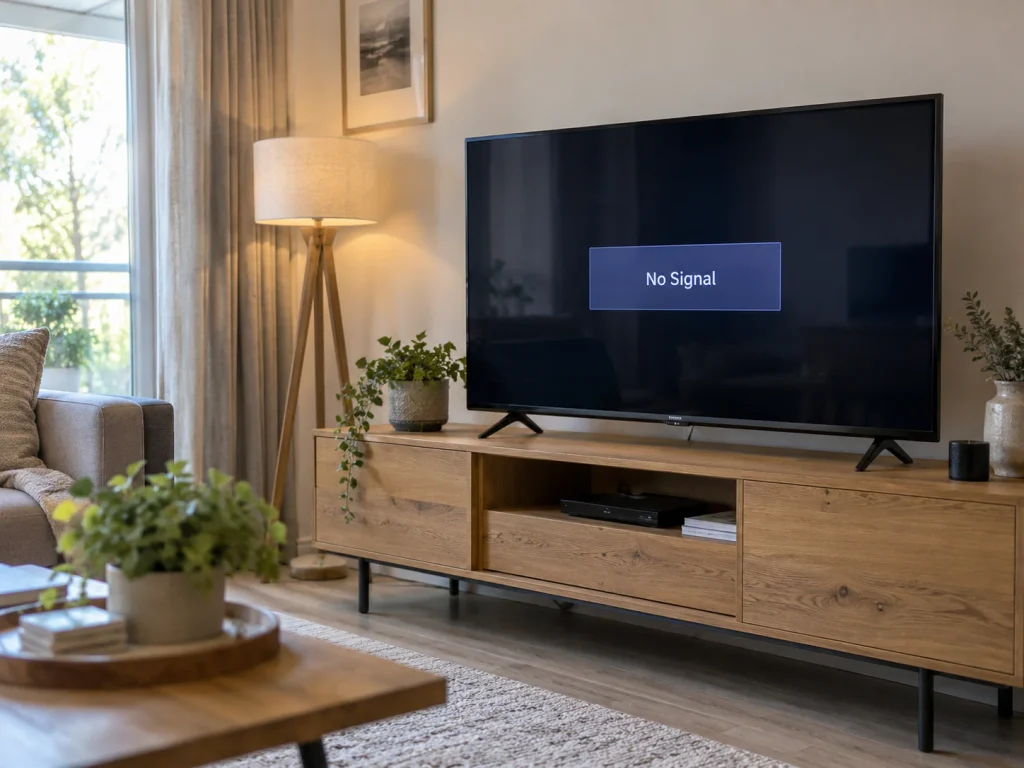
Why Are Some TV Channels Working but Others Aren’t?
This is a common reception problem.
Australian digital television services are transmitted across different frequencies.
A reception system can therefore have enough signal quality for certain channels while performing poorly on others.
If you continually lose the same group of channels, the issue may involve antenna performance, tuning, signal levels or cabling rather than the television itself.
Repeatedly retuning the television usually won’t fix a genuine antenna-system fault.
Should I Retune My TV?
You can try an automatic channel scan if channels have disappeared.
However, retuning should not be the first response to every reception issue.
If the incoming signal is poor, retuning can sometimes remove channels that were previously stored without correcting the actual problem.
Before repeatedly retuning, check the antenna lead and confirm whether other TVs in the property are experiencing the same issue.
Why Does My TV Pixelate When It Rains or Gets Windy?
Bad weather can expose weaknesses in an antenna system.
For example, wind may move a loose antenna or connection while water can affect deteriorated external cables and connectors.
Reception that fails every time there is heavy rain shouldn’t simply be accepted as normal.
A correctly functioning antenna system should provide reliable reception under normal conditions.
Can I Fix TV Reception Problems Myself?
There are several safe checks you can perform inside the house:
- Restart the television.
- Check the antenna cable.
- Try another antenna flylead.
- Check whether other TVs have the same problem.
- Perform a channel scan if appropriate.
- Check whether an amplifier power supply has been unplugged.
Avoid climbing onto the roof to inspect or reposition an antenna unless you are properly trained and equipped to work at heights.
If simple checks don’t solve the issue, proper signal testing is usually faster than replacing components at random.
When Should You Call an Antenna Technician?
Consider arranging an inspection when:
- Several TVs have reception problems
- Channels constantly pixelate
- You regularly receive “No Signal”
- Reception deteriorated after a storm
- Your antenna appears damaged
- Channels repeatedly disappear
- Your amplifier has stopped working
- You’ve already changed the TV cable without improvement
A technician can test the complete system—from the rooftop antenna through the cabling and distribution equipment to individual television points.
TV Antenna Repairs Across Sydney
Prime Antennas Sydney provides TV antenna installation and repair services across Sydney for residential properties.
We can diagnose issues involving antennas, cabling, TV points, amplifiers and reception faults and recommend the appropriate repair based on the condition of the system.
Our services also include:
- TV antenna installation
- Antenna repairs
- Signal troubleshooting
- TV point installation
- Coaxial cabling
- Amplifier and power supply replacement
- TV wall mounting
- Data cabling and home networking
View our Sydney service areas or contact Prime Antennas Sydney to organise an inspection.
Frequently Asked Questions
Why is my TV suddenly saying no signal?
A sudden loss of signal can be caused by a disconnected cable, antenna problem, failed amplifier, damaged power supply or another fault within the antenna system.
Does a TV antenna need replacing if the picture pixelates?
Not necessarily. Pixelation can result from the antenna, cabling, connectors, signal levels or amplification. Testing the system first can determine which component is actually causing the problem.
Will a TV signal booster fix poor reception?
Not always. A booster may help where signal levels are genuinely too low, but it can make problems worse if the signal is already strong or poor in quality.
Why does only one TV have bad reception?
If other TVs work normally, the issue may be associated with the particular TV outlet, cable, splitter or connection feeding that television.
How do I know whether my antenna is faulty?
Visible damage is one indication, but proper signal testing is the best way to determine whether an antenna is performing correctly.
Need Help With Poor TV Reception in Sydney?
If you’re experiencing pixelation, missing channels, signal dropouts or unreliable television reception, the best approach is to identify the cause rather than replacing equipment blindly.
Prime Antennas Sydney can inspect your antenna system, test the signal and identify whether the problem is caused by the antenna, cabling, TV points or amplification.